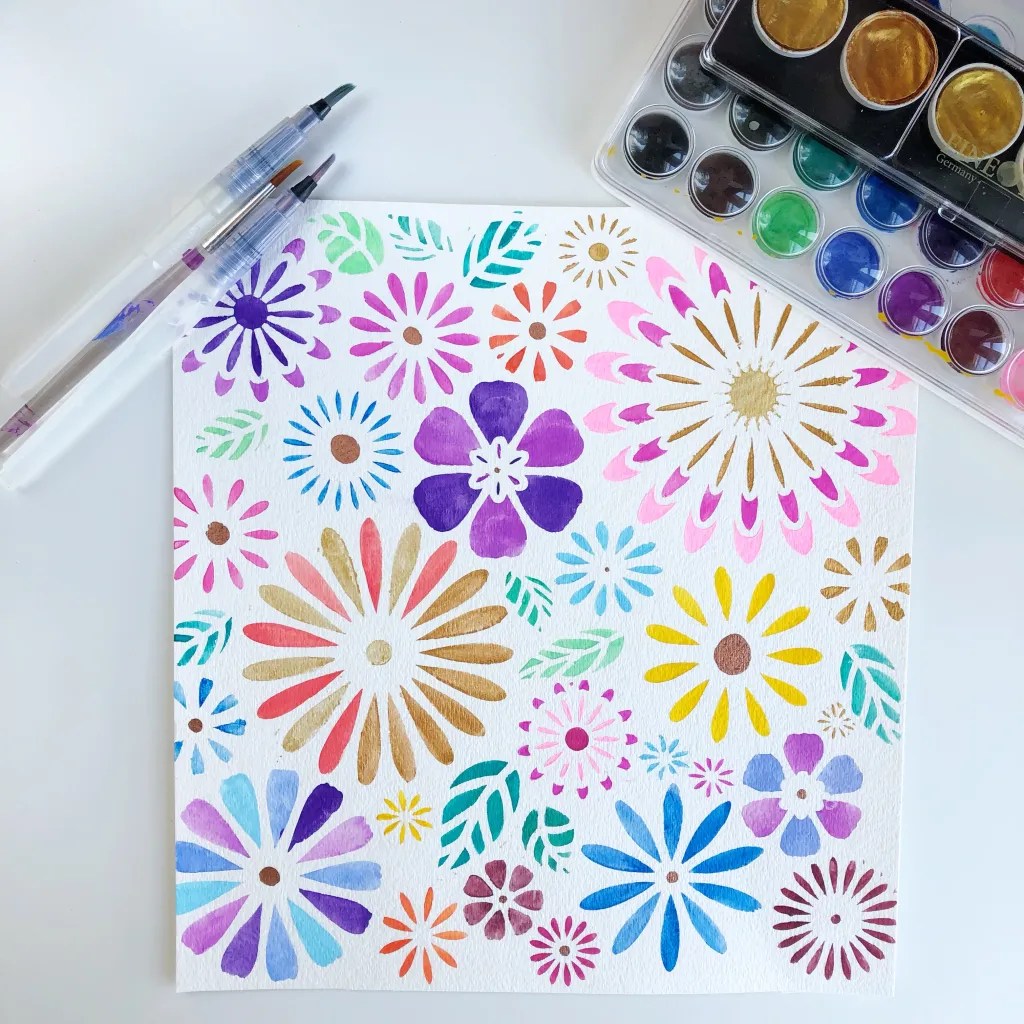
Watercolor has such a creative DNA. It’s fluid, emotional, layered, honest, and a little bit chaotic in the most magical way. Watercolor is one of the oldest artistic languages humans have ever spoken. Long before oil paints, digital tablets, or even paper existed, artists were grinding earth pigments down and mixing them with water to paint cave walls. Watercolors helped create some of the earliest “wet on dry” artworks in history. Besides the beauty of watercolor, there’s a deep history for it, and I can’t stop thinking about getting back into it.
The history of watercolor is fascinating. Ancient Egyptians used water soluble pigments on papyrus scrolls, creating illustrations that still glow with color thousands of years later. Across East Asia, watercolor evolved into a refined spiritual practice. Chinese, Korean, and Japanese artists painted with ink and pigments on paper and silk, blending calligraphy, landscape, and philosophy into a single gesture. These traditions shaped the idea that watercolor isn’t just a medium but it’s also a meditation.
When paper finally spread to Europe, watercolor almost immediately found new life. During the Northern Renaissance, Albrect Durer recognized its potential and created breathtaking botanical studies and landscapes that still feel modern. By the 18th and 19th centuries, English artists like Turner, Girtin, and Cotman transformed watercolor into a serious artistic discipline, using transparent washes and atmospheric light to create works that felt alive. Over time, watercolor became a tool for scientific illustration in a medium for pure expression. From Impressionists to modernists like Kandinsky and Klee, artists embraced its unpredictability. It’s all about the way pigment blooms, the way water decides the final shape, and the way transparency becomes emotion is why watercolor is so beautiful.
Watercolor is unlike any other medium. It’s transparent, delicate, and wild all at once. It dances between intention and surrender. You guide the brush, but the water decides the destination. You plan the layers, but the paper reveals the truth. You leave white space intentionally because it is watercolor, light isn’t added, it’s protected. This is why watercolor feels emotional. It mirrors real life’s unpredictability. You can’t control it, but you can shape it.
I think right now watercolor is the kind of creativity that I need to feed my soul and my need for color. Watercolor rewards presence. It requires slowness and patience. It tells you to breathe, to let go, and requires me to trust the process. It’s about reconnecting to flow and aligning with my need for visual storytelling. It’s also something I’ve done before so my hands sort of know what they’re doing, and it won’t take an incredible amount of thought process and brain power which I’m incredibly limited on.
XOXO,
Savi Monroe
 Savi Monroe XO